How Often Should I Feed My Cat?
If you’ve ever caught your cat staring at you at exactly the same time every day, you’re not imagining it! Cats thrive on routine, especially when it comes to meals. Feeding frequency plays an important role in digestion, energy levels, weight management, and overall health. While there is no single feeding schedule that works for every cat, there are general guidelines that can help you determine what is best for yours.
How Many Times a Day Does a Cat Need to Eat?
The ideal feeding schedule depends on several factors, including age, activity level, and overall health.
-
Kittens typically need to eat more often than adult cats. Most veterinarians recommend feeding kittens three to four meals per day until they are around four months old.
-
Young adult cats between six and twelve months old usually transition well to two meals per day.
-
Adult cats are most commonly fed once or twice daily, with two meals per day being the most widely recommended approach.
According to the Cornell Feline Health Center, dividing a cat’s daily food intake into multiple meals helps support stable energy levels and healthy digestion. The VCA Animal Hospitals also notes that cats are natural grazers. In the wild, they would eat multiple small meals throughout the day rather than one large one.
Some cats benefit from even more frequent, smaller meals, especially very active cats or cats that tend to vomit after eating too much at once. Because every cat is different, your veterinarian can help you determine the most appropriate feeding schedule for your individual pet.

Why Feeding Routine Matters
Cats are creatures of habit. A consistent feeding schedule helps reduce stress, prevents overeating, and makes it easier to identify changes in appetite that could indicate a health concern. Feeding at irregular times or free feeding can make it difficult to know how much your cat is actually eating.
This is especially important in multi-cat households, where one cat may eat more than their share while another eats too little. Without a controlled routine, it can be hard to ensure every cat is getting the right amount of food.
Tools That Help You Monitor Your Cat’s Eating Habits
Monitoring how often your cat eats can be challenging, particularly if you are away from home during the day or have multiple pets. Some pet parents track meals manually using notes or phone reminders, but this requires consistency and does not always give a full picture of actual eating behavior.
Automated feeding tools can help remove that uncertainty. Feeders that control meal timing and portions make it easier to maintain a regular routine. According to the Cat Fanciers' Association, controlled feeding is one of the most effective ways to manage weight and prevent food competition in multi-cat homes.

How an Automatic Microchip RFID Feeder Can Help
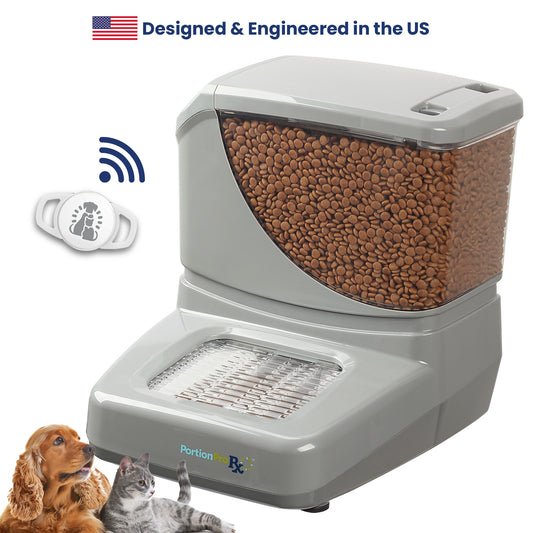
The PawsPik Automatic Microchip RFID Pet Feeder takes the guesswork out of feeding by personalizing mealtime for each individual cat. Instead of relying on a shared bowl or manual portioning, the feeder uses your cat’s existing microchip to recognize them and open only when the correct cat approaches.
This means every cat gets access to their own food, on their own schedule, without interference from other pets.
With the PawsPik Automatic Microchip RFID Pet Feeder, you can support healthier feeding habits by:
-
Ensuring your cat eats the appropriate number of meals per day, even when you are not home
-
Preventing food stealing in multi-cat households by allowing access only to the programmed cat
-
Maintaining consistent portion sizes to support healthy digestion and weight management
-
Creating a predictable feeding routine that reduces stress and begging behavior
-
Monitoring eating habits more easily, making it simpler to notice changes in appetite
The feeder is especially helpful for cats on prescription or specialty diets, cats that eat at different speeds, or households where one cat tends to overeat while another eats too little. Because access is controlled by microchip, each cat can eat safely and calmly without competition.
By automating mealtime and personalizing access, the PawsPik Automatic Microchip RFID Pet Feeder helps you stick to the feeding schedule that works best for your cat, even on busy days or while traveling.