If you’ve ever found yourself asking how often you should feed your cat, you’re not alone. Feeding frequency plays a major role in your cat’s digestion, weight management, and overall health. While every cat is different, most adult cats thrive on two to three measured meals per day. Kittens may need three to four smaller meals, while some cats with medical needs benefit from more controlled, scheduled feeding routines.
Why Meal Frequency Matters
Cats are natural grazers and hunters. In the wild, they would eat multiple small meals throughout the day. Replicating this pattern at home helps:
-
Prevent overeating
Reduce vomiting from eating too quickly -
Support healthy weight management
-
Maintain consistent energy levels
The key isn’t just how often your cat eats, it’s also how controlled and consistent those meals are.
Scheduled Feeding for Consistency
If your schedule is busy, an automatic cat feeder with camera can help you maintain consistent feeding times. The PawsPik® NutriWatch Automatic Cat Feeder with Camera functions as a full wifi pet feeder with camera, allowing for Remote Monitoring/Control right from your phone.
With Scheduled Feedings and Customizable Portions, you can serve two to three perfectly measured meals per day without worrying about overfeeding. This makes it an ideal pet feeder with camera and app control for pet parents who want structure and flexibility.
Because it’s a true smart pet feeder with camera, you can:
-
View meals in real time with a 2K HD camera and night vision
-
Use two-way audio to interact live
-
Receive motion detection and smart alerts
-
Monitor food levels and low battery indicators

Its 16-cup large capacity, easy-clean stainless-steel bowl, and backup-battery power ensure reliability. You can even track feeding data and share with your vet, which is especially helpful if your cat is on a weight management or therapeutic feeding plan. While designed primarily as an automatic cat feeder with camera, it also works as an automatic dog feeder with camera for small dogs in multi-pet households.
Multi-Cat Homes & Selective Feeding
If you have more than one cat, feeding frequency becomes more complicated. One cat may eat too much, while another doesn’t get enough. That’s where an automatic microchip pet feeder can make a major difference.
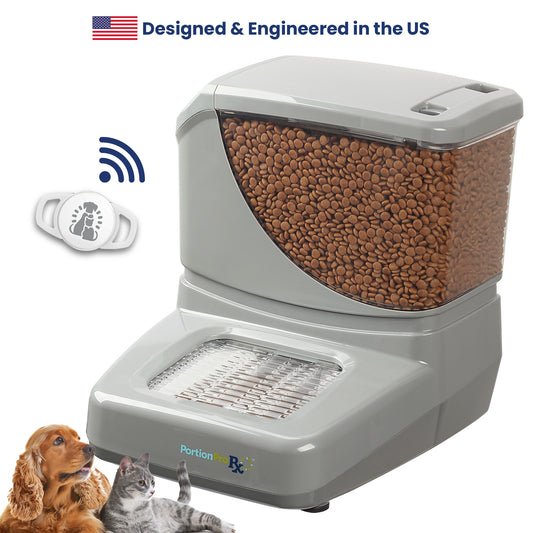
The PawsPik® Automatic Microchip RFID Pet Feeder is a microchip activated cat feeder that only opens for one designated pet. As a cat feeder that only opens for one cat, it prevents food stealing and ensures each cat eats the correct amount.
This RFID automatic pet feeder is compatible with ISO microchips and PawsPik RFID tags. Because it pairs with only one pet per unit, it acts as a true selective pet feeder, making it perfect for multi-pet families or cats on prescription diets. It’s especially useful for therapeutic feeding, portion control, and weight management.
Using a microchip cat feeder or automatic microchip cat feeder helps maintain structured feeding frequency without supervision. Each cat can eat their scheduled meals without interference.
So, How Often Should You Feed?
For most healthy adult cats:
-
2–3 scheduled meals per day is ideal.
-
Use portion control to prevent free-feeding weight gain.
-
Consider automated solutions for consistency and peace of mind.

Whether you choose an automatic pet feeder with camera for remote monitoring or an RFID pet feeder for selective access, structured feeding helps your cat maintain a healthier routine.
Consistency, portion control, and the right technology can make answering “How often should my cat eat?” much simpler, and far more precise.